The Best Heating System for My Home: A Guide
Despite the claims of some outlets, there is no one-size-fits-all heating solution for every home. The right option will depend on the size of your home, its power and gas supply, how well it is insulated, and your priorities as the homeowner.
Your home’s energy spending is largely dominated by your heating and water usage. The Energy Saving Trust explains that central heating and water make up more than half of what a typical household spends on energy each year.
In this article, we will look at the most common heating systems and the options for homes off the gas grid, low-carbon options like heat pumps, and simple ways to heat your home more efficiently, whether you’re building from scratch or renovating.
What Heating System Is Best for My Home?
The best heating option is going to be the one that fits the home and the homeowner. There are a few factors to consider when choosing:
- Mains Gas Supply – If the home is not connected to the mains supply, you may need to explore other options.
- Hot Water Needs – More people and bathrooms mean higher hot water demands.
- Insulation – A house with little insulation may need a more powerful heating solution to maintain temperature.
- Space – Systems may need outdoor room, and solar panels need a suitable roof.
- Costs – A system that is cheap to buy is not always cheap to run.
- Environmental Impact – Some systems burn fossil fuels, and others are lower carbon.
If you are doing a major renovation to your home, or building a new one from scratch, this is the best time to consider your heating options.
Gas Central Heating and Choosing the Right Boiler
In the UK, gas-powered central heating is the most common type of heating, with around 80% of homes being powered by natural gas. This makes sense when you consider that it is a reliable and cost-effective heating solution.
There are three main types of boilers that rely primarily on gas: a combi boiler, a system boiler, and a heat-only boiler.
A combi boiler heats water instantly with no storage tank, saving space, but it often has quite low capacity and will struggle when supplying multiple hot water sources at the same time. It is most suited to smaller homes or flats.
System boilers similarly heat water but store it in the hot water cylinders, so it is ready to use straight away. They are able to deliver hot water to several sources throughout a large home.
Heat-only boilers have cold water storage tanks in addition to heated water cylinders. This option requires a large amount of storage space, typically in a loft, but it is recommended for homes that have low water pressure.
In truth, if a boiler is working perfectly well already, there is no real reason to replace it right away. It is usually better to consider replacing it once it reaches the end of its working life.
Building a new home or renovating and not sure which boiler setup is right for you? Get in touch with our team, and we’ll be happy to help you plan the best option for your project.
Heating Options for Homes Off the Gas Grid
Over a million homes in the UK are being heated while not connected to the main gas grid, largely in rural areas. There are a few options, although none of them are as cheap and convenient as gas heating.
Oil and LPG (liquefied petroleum gas) options are stored in a large tank outside a house and need to be refilled regularly. On top of this, the prices of refills are dependent on the market value of fuel prices, so you may find yourself paying more when global demand is high.
Electric heating options come in a few forms. Electric radiators and panel heaters function the same as a traditional radiator, without a boiler. While they are cheap to buy, they can be expensive to run due to electricity being more expensive per unit than gas. Boilers can also be solely electrical, but they have the same problem with running costs.
If your home is not on the gas grid, the right choice will depend on your space, your budget and how important a lower carbon footprint is to you.

Heat Pumps and Low-Carbon Heating
Heat pumps can be a powerful option for the right homes. They work differently from a boiler, drawing heat from the outside air or ground and bringing it into the home.
They are strikingly efficient. For every one unit of electricity used to bring heat into the home, three to four units of heat are delivered, making the efficiency around 300 to 400%, with equivalent gas boilers running at 94% maximum efficiency.
Of course, there are downsides: the cost of purchase and installation is quite high, they need a well-insulated home to work well, and you will need a hot water cylinder, as they do not heat water instantly.
For those looking to make the switch to more sustainable heating options, like heat pumps, the government has a grant available to help make the switch.
The Boiler Upgrade Scheme is a grant of up to £7,500 when switching from a gas boiler to a heat pump, and if you are switching from an oil or LPG system, the grant can be as much as £9,000.
Underfloor Heating
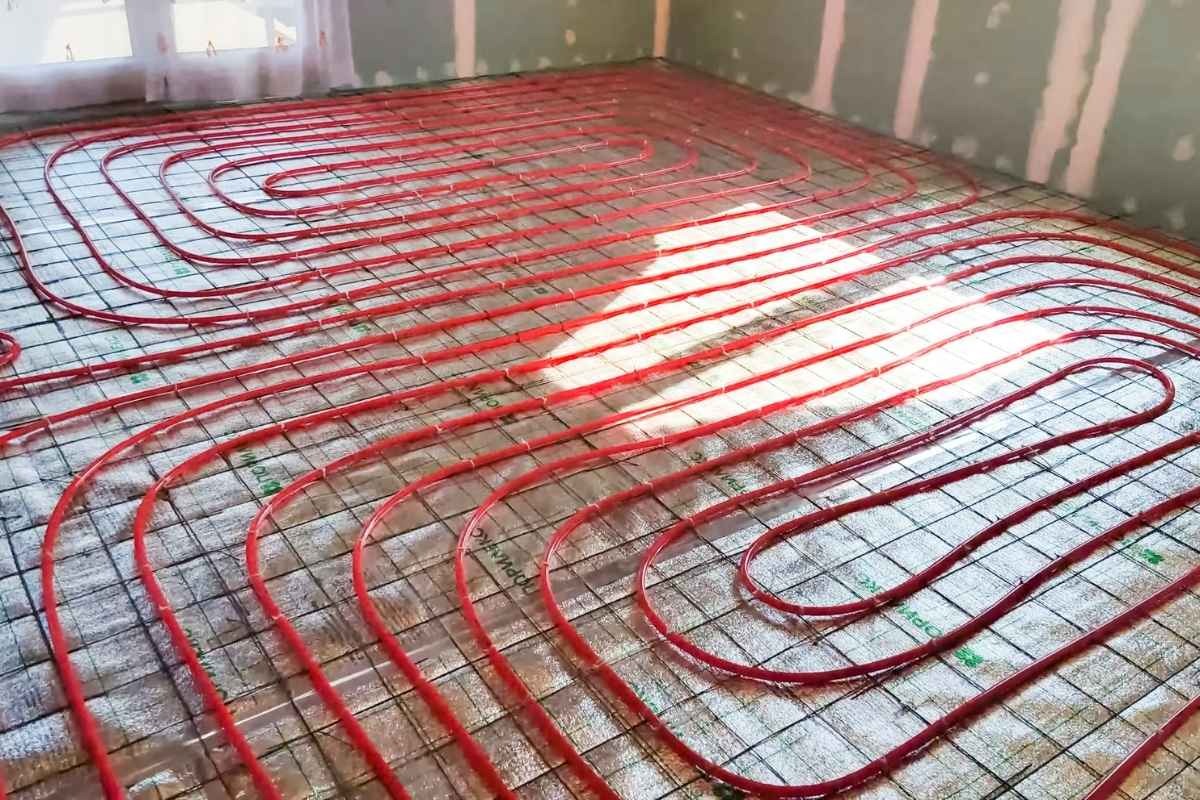
Underfloor heating is different because it warms the home from the floor upwards, rather than from a radiator on the wall. Heat rises evenly, giving a consistent temperature throughout a room.
There are two types of underfloor heating: wet systems and electric systems. Wet systems act the same as radiators, carrying heated water from a boiler, while electric systems use mats or cables. Electric systems excel at heating spaces quickly, but similarly to electric radiators, they can become costly when heating an area.
What Is the Best Way to Heat a Home Efficiently?
There are a lot of good, cost-effective options to heat your home, but without retaining that heat, it can never perform at its best. Building from scratch or adding an extension makes this simple, as proper insulation can be added from the start.
There are a few simple steps to follow:
- Get the temperature right
- Only heat what you need
- Keep your system serviced
Choosing the Best Heating System for Your Home
With so many heating options to choose from, the right one will always depend on your needs and what is available to you. Whether you have mains gas, how well your home is insulated, your hot water needs, your budget, and the environmental impact will all play a part.
The best time to choose to change your heating is when you are constructing a new home, or renovating an existing one. Planning all the elements together means your heating, insulation, and floors can work as one from day one.
At Adref, we build homes throughout Pembrokeshire, Ceredigion, and Carmarthenshire, and we understand that the right heating makes a real difference. Whether you are planning a new build, an extension, or a renovation, we can help you choose the system that suits your home.
Start your project with us or get in touch to find out how we can help with your home project.